
Weak Pelvic Floor in Men: Signs, Causes, and How to Treat It

A weak pelvic floor in men can show up as leaking when you cough, dribbling after you pee, rushing to the bathroom, or changes in erections. If any of that sounds familiar, you're far from alone. It's common, it's rarely talked about, and it's very treatable.
Yes, men have a pelvic floor too. It's a group of muscles at the base of your pelvis that helps control your bladder, bowels, and sexual function. When those muscles get weak, tight, or uncoordinated, everyday things start to feel less reliable.
The good news is that pelvic floor physical therapy helps most men make real progress, often within a few months. In this guide, we'll walk through what a weak male pelvic floor is, the signs to watch for, what causes it, and what treatment actually looks like.
What Is a Weak Pelvic Floor in Men?
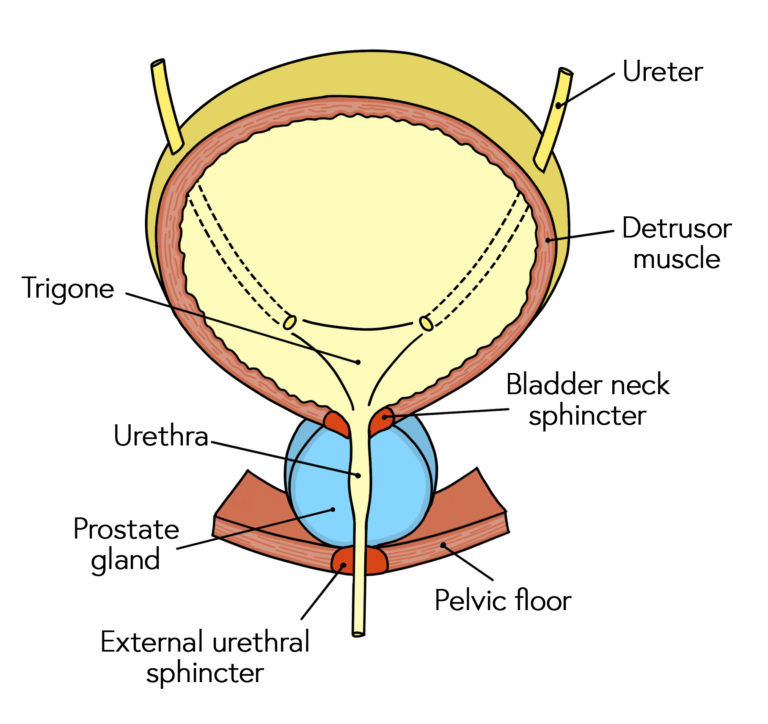
Your pelvic floor is a hammock of muscles stretching from your pubic bone in front to your tailbone in back. It sits underneath your bladder, prostate, and rectum and holds them in place.
These muscles have a few big jobs. They squeeze to keep urine and stool in, relax so you can go to the bathroom, and help with erections and ejaculation. They also work with your deep core and breathing muscles to support your spine.
What "weak" really means
A weak pelvic floor means these muscles can't contract hard enough, long enough, or fast enough to do their jobs. For example, a sudden cough or lift puts pressure on your bladder. If the muscles can't tighten in time, a little urine slips out.
Weakness can also mean poor endurance. You may be able to engage the pelvic floor muscles well in the morning, then notice more dribbling or urgency by the end of a long day.
Weak vs. tight: why it matters
Here's something many men don't know: symptoms that look like weakness can come from muscles that are too tight. This is sometimes called an overactive pelvic floor. Muscles that never fully relax get tired and can't engage well when you need them to.
That's why doing Kegels on your own doesn't always help, and can sometimes make things worse. The pelvic floor is connected to a bigger system of the body, including the core. At Revive, we refer to the core as the pelvic floor, abdominal muscles, back muscles, and glutes. It is important that all of these muscles are able to fully relax and engage and work together as a unit. If one piece is missing or too tight or too weak, it disrupts the entire system.
A pelvic floor physical therapist checks whether your muscles need strengthening, relaxing, or better coordination before building a plan. You can learn more about male pelvic floor therapy on our website.
How common is it?
Pelvic floor problems in men are more common than most people think. They're especially common after prostate surgery, with age, and in men who strain, lift heavy, or sit for long hours. Because most men never bring it up, many assume they're the only one dealing with it. The longer the symptoms last, the more they start to impact your daily life.
Signs and Symptoms of Male Pelvic Floor Weakness
Male pelvic floor weakness rarely shows up as just one thing. Most men notice a mix of bladder, bowel, and sexual changes that build slowly over time. Here's what to watch for.
Bladder symptoms
Stress incontinence: leaking urine when you cough, sneeze, laugh, lift, stand up, exercise, or as the day goes on
Post-void dribbling: a few drops leaking into your underwear a minute or two after you've finished peeing
Urgency: a sudden, strong need to go that's hard to put off
Needing to pee more often during the day, or waking up at night to go
A weak stream, or feeling like your bladder isn't fully empty
Post-void dribbling is one of the most common signs in men, and one of the most overlooked. Many men assume it's just part of getting older. It often responds well to targeted exercises.
Bowel symptoms
Trouble holding in gas
Small stool leaks or staining
Urgency to have a bowel movement
Feeling like you haven't fully emptied, or needing to strain
Constipation
Sexual symptoms
Softer erections, or trouble getting or keeping an erection
Early (premature) ejaculation
Less intense orgasms
Pain during or after ejaculation (this one often points to tight, not weak, muscles)
Your pelvic floor muscles help trap blood in the penis during an erection. When they're weak, erections can be harder to get or keep, even when blood flow and hormones are normal. This is one reason erectile dysfunction and pelvic floor problems often coincide together.
Other signs
Low back or hip discomfort that doesn't have a clear cause
A feeling of heaviness or pressure in the area between your scrotum and anus
Symptoms that get worse as the day goes on
You don't need to have every symptom on this list. Even one that keeps bothering you is worth getting checked.
What Causes a Weak Pelvic Floor in Men?
There's usually no single cause. Most often, a few factors add up over years until the one day you hit the breaking point and the symptoms are too much. New stressors like a new job or relationship problems, or repetitive movements without proper mechanics, or one wrong movement at the gym all add up and can cause tightness and therefore weakness of the pelvic floor.
Prostate surgery and treatment
Prostate surgery is one of the biggest causes of leaking in men. A radical prostatectomy (removing the prostate for cancer) can affect the muscles and nerves that control urine flow. Surgery for an enlarged prostate and radiation can have similar effects.
The prostate is smooth muscle and it automatically regulates urination. Therefore, when this is removed, the body loses its automatic system. The body must learn new techniques and strategies for regulating the urine on its own. A pelvic floor therapist can help with the different strategies for this as well.
It is important to note that you do not need to wait until after your prostate removal to start physical therapy. The early the intervention for therapy, the better, to help your brain and body connect for better pelvic floor control. If there is a lot of pelvic floor tightness, therapy can also help that become more relaxed prior to surgery for improved symptoms post-surgery.
Age
Like every muscle, the pelvic floor loses strength and endurance with age if it isn't trained. Changes in the prostate and bladder with age can add extra strain.
Chronic pressure and straining
Long-term constipation and straining on the toilet
A chronic cough from illness, smoking, asthma, or allergies
Heavy lifting at work or in the gym without good breathing technique
Carrying extra weight around the belly, which puts more pressure down on the pelvic floor
Sitting and posture
Long hours at a desk, in a truck, or on a bike seat can leave the pelvic floor weak in some men and tight in others. Poor posture changes how your core and pelvic floor share the load.
Nerve and health conditions
Diabetes
Back or spine problems
Stroke, Parkinson's disease, or multiple sclerosis
Past pelvic injury or surgery
Overactive (tight) muscles
As mentioned earlier, muscles that stay tensed all the time can become tired and ineffective. Stress, anxiety, and habitually "holding it in" can all feed into this. It's one more reason a proper assessment matters before starting any exercise plan
It is also important to note--as symptoms continue to persist and daily function continue to be impacted, the more the mental state is affected. When you lose daily or pleasurable function, that takes on your mental and emotional side of things. We know this isn't an easy topic to talk about, but at Revive we understand the weight this carries in your pelvic floor.
Treatment Options for a Weak Male Pelvic Floor
Most men start with conservative care, and many never need anything more. Pelvic floor physical therapy is usually the first step, because it targets the root of the problem instead of just managing symptoms.
Here's what treatment can include:
A full pelvic floor assessment. Your therapist checks strength, endurance, coordination, and whether your muscles relax fully. This tells you whether you need strengthening, relaxation, or both.
Guided pelvic floor exercises. Done correctly, Kegel exercises work well for true weakness. Your therapist teaches you how to find the right muscles, how long to hold, and how to build up over time.
Relaxation and down-training. If your muscles are tight, you'll work on letting them go first. Strengthening a tense muscle can make symptoms worse.
Breathing and core training. Your diaphragm, deep abs, and pelvic floor work as a team. Learning to breathe and engage well protects the pelvic floor during lifting, coughing, and exercise.
The "knack" and daily-life strategies. You'll learn to engage before a cough, sneeze, or lift. You'll also learn a simple technique to clear the last drops after peeing and stop post-void dribbling.
Bladder and bowel habits. This covers fluid timing, cutting back on bladder irritants like caffeine and alcohol, and avoiding straining. Grab a squatty potty or step stool to put your feet on while having a bowel movement to promote more relaxation.
Pre- and post-surgery rehab. If you're facing prostate surgery, starting pelvic floor work beforehand can make recovery smoother.
Medical options. For some men, medications, devices, or procedures from a urologist are part of the plan. Physical therapy often works alongside them.
How long does treatment take?
Every body is different. Many men notice early changes within 4 to 6 weeks of consistent work, with bigger progress over 3 to 6 months. Your therapist will set realistic goals with you at your first visit.For more on what sessions look like, see our pelvic floor physical therapy page.
When to See Someone
You don't have to wait until symptoms are severe. If something is changing how you live, work, exercise, or feel about yourself, that's reason enough to get it checked.
Consider booking a pelvic floor evaluation if:
You leak urine when you cough, lift, laugh, or work out
Post-void dribbling is staining your clothes or making you self-conscious
You're planning prostate surgery, or you're still leaking weeks or months after it
You've tried Kegels on your own and nothing has changed, or things got worse
You're dealing with erection changes, early ejaculation, or pain with sex
You're planning your day around where the bathrooms are
Check with your doctor first if
Some symptoms need a medical workup before physical therapy. Contact your doctor promptly if you notice:
Blood in your urine or stool
Burning with urination, fever, or signs of infection
A sudden inability to pee
Sudden leaking along with numbness in your groin, legs, or back pain
Unexplained weight loss
These can signal a problem that needs care right away. Once serious causes are ruled out, pelvic floor therapy can pick up from there.
What to expect at your first visit
A first visit at Revive consists of diving in your medical history and physical exam. The physical exam is an internal anal exam to assess the pelvic floor muscles. This is NOT a must, but we do believe that it is the Gold Standard of care to truly know what is happening in the pelvic floor without guessing. We also the core: abdominals, back muscles, glutes, in addition to the pelvic floor.
If you would like to book an initial evaluation, follow this link to fill out a contact form or give us a call at 515-207-0342.
Frequently Asked Questions
Do men have a pelvic floor?
Yes. Men have a pelvic floor just like women do. It's a group of muscles at the base of the pelvis that supports the bladder, prostate, and rectum. These muscles help control urine and bowel movements, and they play a key role in erections and ejaculation. They can become weak or tight at any age.
Can I fix a weak pelvic floor with Kegels at home?
No. Kegels can help if your muscles are truly weak and you're doing them correctly. But many men squeeze the wrong muscles, hold their breath, or actually have tight muscles that need to relax first. A pelvic floor physical therapist can check your technique and tell you whether Kegels are right for you.
How long until I notice a difference?
Many men notice small improvements, like less dribbling, within 4 to 6 weeks of regular exercise. Bigger changes usually take 3 to 6 months, because muscles need time to build strength and endurance. Your progress depends on your symptoms, your health history, and how consistently you practice at home.
Is there a pelvic floor PT near West Des Moines who treats men?
Yes. Revive offers pelvic floor physical therapy for men in the West Des Moines area. We help with leaking, dribbling, recovery after prostate surgery, and pelvic pain. If you live in West Des Moines, Johnston, Waukee, Clive, Urbandale, or Des Moines, reach out to schedule an evaluation.
You Don't Have to Just Live With It
A weak pelvic floor can make you feel like your body isn't on your side anymore. You might skip the gym, avoid long drives, or avoid intimacy. That's a lot to carry quietly.
These symptoms are common, they're not your fault, and they're not something you simply have to accept with age. With the right plan, most men get meaningful improvement in their bladder control, comfort, and confidence.
If you're in West Des Moines, Johnston, or the surrounding area and something in this article sounded familiar, we'd be glad to talk it through. Just fill out a contact form when you're ready, and we'll help you figure out your next step.
About the Author

Dr. Courtney Buhrow, DPT, has been a practicing physical therapist for 8.5 years and is the owner of Revive, which she founded nearly five years ago. Her work centers on pelvic floor therapy, with a particular focus on complex cases, the patients whose symptoms have been misunderstood, dismissed, or left unresolved elsewhere. She treats both women and men across the adult lifespan for bladder, bowel, and sexual dysfunction. She takes a whole-body, holistic approach to care, recognizing that symptoms, dysfunction, and people themselves are multifactorial, and that lasting results come from treatment that is just as multimodal.

Comments